
Osceola County Probate Records
Osceola County probate court records are filed and kept at the county courthouse in Reed City, Michigan. The 49th Circuit Court serves Osceola County along with neighboring counties in the region. Probate matters here include estate filings, guardianships, conservatorships, and trust cases. Because Osceola is a smaller rural county, most record requests are handled in person or by mail. Online access is limited compared to larger courts, but there are still ways to search for case information. This page covers how to find, request, and get copies of Osceola County probate court records, along with the fees, forms, and contact details you need to know.
Osceola County Probate Court Overview
Osceola County Probate Court Office
The Osceola County Probate Court is at 301 W. Upton Ave., Reed City, MI 49677. Call (231) 832-3261 to reach the court clerk. The office is in the Osceola County Courthouse, a small building in the heart of Reed City. Hours are Monday through Friday, 8:00 AM to 5:00 PM. Walk-ins are welcome during those hours. If you plan to visit, bring as much case info as you can. The staff can look up files by name or case number, but having details on hand speeds things up a lot.
Osceola County is part of the 49th Circuit Court. This circuit also covers Mecosta County. The probate division runs separately from the circuit court division but shares staff and resources. Under MCL 700.1302, the probate court has exclusive say over estates, trusts, guardianships, and conservatorships. The Osceola County website has basic contact info and some court details, though it is not as feature-rich as sites for bigger counties.
For mail requests, send a letter to the Osceola County Probate Court at 301 W. Upton Ave., Reed City, MI 49677. Include the full name of the person, the case number if you have it, and a note on what you need. Send a check or money order for the copy fees. Add a self-addressed stamped envelope so the court can mail the records back to you.
Searching Osceola County Probate Records Online
Online access to Osceola County probate court records is limited. The county does not have its own case search tool on the web. This is common for smaller counties in Michigan that lack the budget for a full online portal. But you still have a few options to search from home.
The statewide MiCOURT Case Search is the best starting point. Select Osceola County and choose the probate court type. You can search by party name or case number. Results show basic case info, parties, and docket entries. Not every old case is in the system, but cases from recent years should show up. This tool is free and open to the public.
If you need to file documents, MiFILE is the state's electronic filing system. Attorneys and self-represented parties can submit petitions, motions, and other papers online. This saves a trip to Reed City. You still need to pay filing fees through the system, and some documents may need original signatures. Check with the court clerk if you are not sure what MiFILE will accept for Osceola County probate cases.
Note: Osceola County does not have a local online case search portal. Use the statewide MiCOURT system for record lookups.
The Osceola County website provides contact details and basic court information for residents.
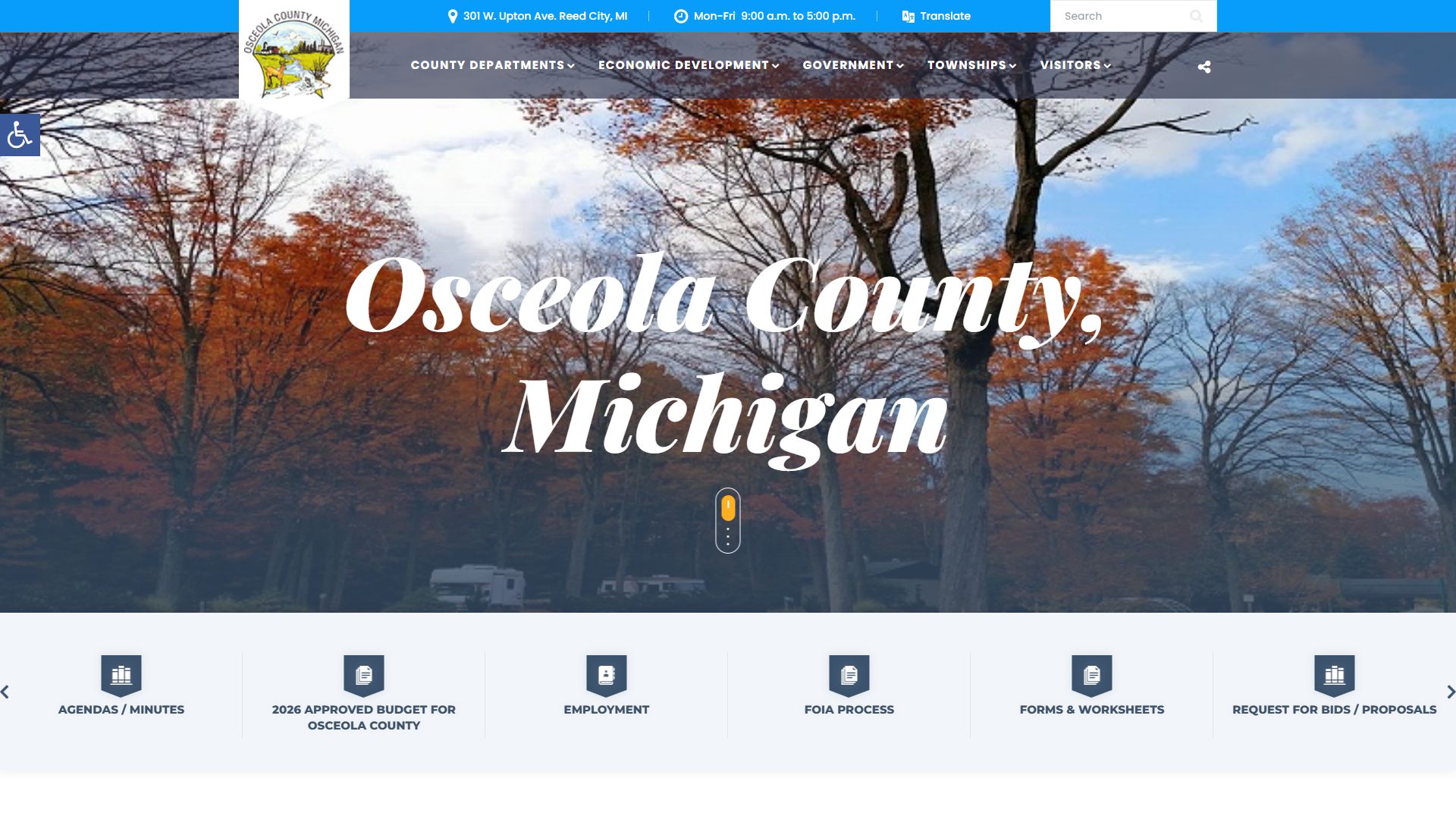
Visit the county site for office hours, phone numbers, and directions to the courthouse in Reed City.
Osceola County Probate Record Fees
Copies of Osceola County probate court records cost $2 per page. Certified copies are $11 for the first page and $1 for each page after that. These fees match the standard set by the State Court Administrative Office for all Michigan courts. Cash and checks are the most common payment at the counter. Some courts accept credit cards now, but call ahead to confirm what Osceola County takes.
Filing fees for new probate cases vary by type. Opening an estate case runs about $150 to $210. Guardianship petitions have their own fee schedule. There is also an inventory fee set by MCL 600.871 that depends on the total value of the estate. Small estates pay less. Large ones pay more. This fee is separate from the filing cost and is due after the inventory is filed with the court.
If you cannot afford the fees, Michigan courts allow a fee waiver request. Use SCAO Form MC 20 to ask the court to waive your fees. The judge will look at your income and expenses. Not everyone gets approved, but it is worth trying if money is tight.
Estate Filings in Osceola County
Estate cases make up most of the Osceola County probate court records. When someone in Osceola County dies, the estate may need to go through probate. Informal probate is the most common path. Use SCAO Form PC 558 to start an informal case. Formal probate, which involves more court oversight, uses Form PC 559. Both forms are free on the SCAO probate forms page.
Small estates can skip the full probate process. Under MCL 700.3982, if the estate is worth $15,000 or less after funeral costs, an heir can use a small estate affidavit to collect assets. This avoids opening a court case entirely. It is a simpler route for families dealing with modest estates. The affidavit must wait at least 28 days after the date of death before it can be used.
Osceola County estate files hold the will (if there is one), the petition, letters of authority, an inventory of assets, creditor claims, accountings, and final orders. All of these are public records under Michigan Court Rule 8.119. Anyone can ask to see them at the court clerk's office.
Guardianship and Conservatorship Records
Guardianship cases in Osceola County cover both minors and incapacitated adults. A guardian makes personal and medical decisions for someone who cannot do so alone. A conservator handles money and property. Sometimes one person fills both roles. These cases create detailed court records that include petitions, medical evaluations, background checks, bond paperwork, annual reports, and court orders.
To file a guardianship for an adult in Osceola County, use Form PC 625. For a minor, use Form PC 603. Conservatorship petitions use Form PC 630. All forms are free at the SCAO website. The court sets a hearing date after you file. Notice must go to all interested parties. A guardian ad litem may be appointed to look into the situation and report back to the judge.
Most guardianship and conservatorship records are open to the public. Mental health commitment records are restricted. The court will not hand those out to just anyone. You need to show a legal reason or get a court order to access sealed or confidential files.
Legal Help for Osceola County Probate Matters
Michigan Legal Help is a free resource for people who need to handle probate cases on their own. The site has step-by-step guides for estates, guardianships, conservatorships, and other common filings. It walks you through which forms to use and how to fill them out. This is a good starting point if you cannot hire a lawyer.
The State Bar of Michigan runs a lawyer referral service. You can call and ask for a probate attorney in the Osceola County area. There are not as many lawyers in rural areas as in cities like Grand Rapids or Detroit, so you may need to look at attorneys in nearby counties too. Some offer free consultations.
The Michigan Courts website has links to rules, forms, and contact info for all 83 county probate courts in the state. It is a useful hub if you need to compare procedures across counties or find a specific form. MCL 600.855 requires all filings to use SCAO-approved forms, so make sure you have the right version before you submit anything to the Osceola County Probate Court.
Tips for Getting Osceola County Probate Court Records
Start with a phone call. The staff at (231) 832-3261 can tell you if a case exists and what you need to do to get copies. They deal with a smaller volume of cases than urban courts, so wait times tend to be short. Be polite and have as much info ready as you can. A full name and approximate date of filing helps a lot.
If you visit in person, bring cash or a check for copy fees. The courthouse in Reed City is easy to find. Parking is free. The building is not large, so you will not have trouble finding the right office. Plan to spend 20 to 30 minutes for a basic records request. More complex requests, like pulling an entire estate file with dozens of pages, could take longer.
For anyone searching from out of state, the mail option works fine. Just allow extra time. A week to ten days is typical for a response, sometimes more if the court is busy or your request needs clarification. Follow up by phone if you have not heard back after two weeks.
Nearby Counties
If you need probate court records from a county near Osceola, each of these courts handles its own filings and maintains its own records: